
USFSS Newsletter, Issue No. 2 October 2026
Welcome from the USFSS Board Chair
Dan Hanks, USFSS Board Chair
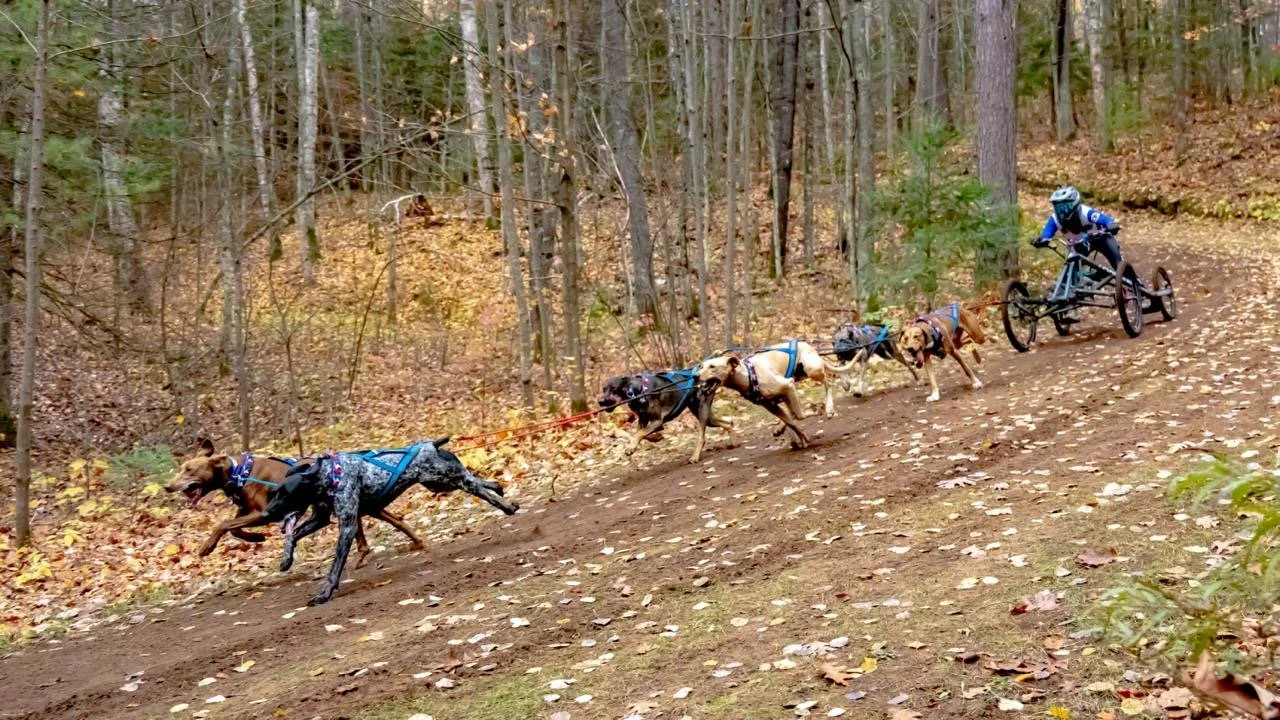
Samantha Wawiernia racing her Six Dog Rig Team at 2025 IFSS Dryland World Championships & Masters
On the threshold of an action-packed dryland race season, I am excited to share with you the second edition of our USFSS newsletter. Here are a few updates as the newsletter evolves: we are thrilled to have Joy Weis, from Lucky Fox Coaching, as a regular columnist. Joy will be contributing her expertise each month on fitness and wellbeing for our community. If you have any topics that you would like to have her address, please send them to usfss.usa@gmail.com.
We also expect that Sylvain Lefrebvre, the IFSS Continental Director for North America, will provide regular updates on IFSS programs, races, and news.
We are expecting a good crew for our upcoming USFSS National Judge program in Cle Elum, Washington in October. Jim Cunningham will conduct the training. He is a steady presence in the IFSS universe, and he is profiled in this issue of our newsletter.
Here's to a safe and fun race season!
IFSS-Accredited Fall Dryland Races, as of October 1, 2026
-
Northwest Dryland Championship, October 10-11, Washington
Byllesby Dryland Derby, October 17-18, Minnesota
Lost Pines Dryland Race, October 24-25, Michigan
Northwest Dryland Challenge, October 24-25, Washington
Osceola Tug Hill Dryland, October 31-Nov 1, New York
Minocqua Dryland Dog Dash, October 31-November 1, Wisconsin
-
Cherry Hill Dryland, November 7-8, Maine
Ethan Howard Memorial Rig Race, November 14-15, New Hampshire
Charlton Park Dryland Challenge, November 14-15, Michigan
North East Dryland Challenge, November 21-22, Pennsylvania
-
Allatoona Sled Dog Dryland, January 2-3, Georgia
“RGO” Training Update:
USFSS has now conducted two of the three sessions for RGOS for IFSS-accredited races. The last one for the fall dryland season will be held on October 7, 2026. Please contact USFSS Board Member Marie Ralff (usfss.raceresults@gmail.com) if you want to attend. We will offer more sessions before the winter season and again before the spring dryland season. These sessions are designed to provide RGOs with critical information about updated IFSS rules and USFSS exception to those rules.
News from Sylvain Lefrebvre, the IFSS Continental Director for North America
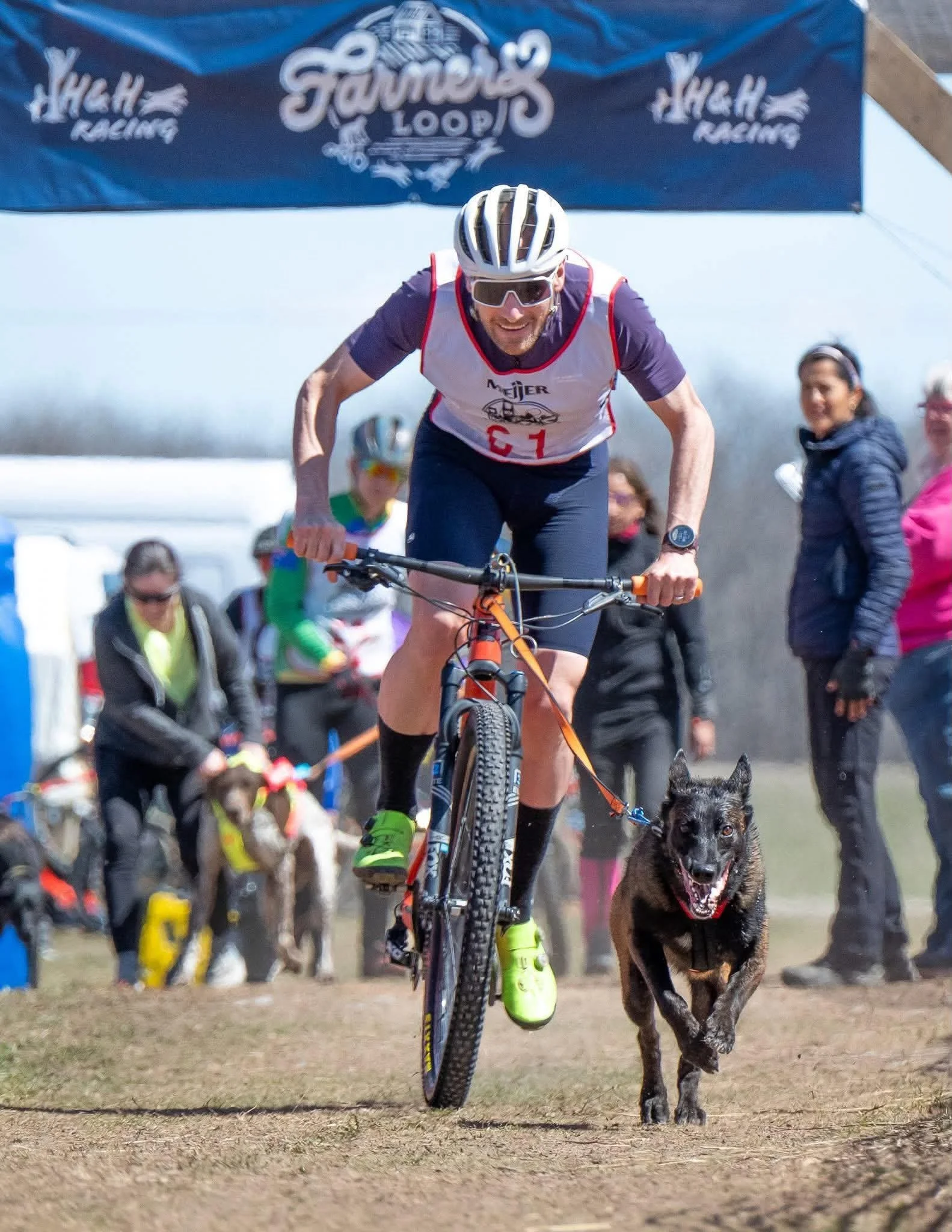
Sylvain racing with Zuma
Dear athletes,
In June 2026, the IFSS Youth Committee and the IFSS Vice President of Development opened applications for junior athletes seeking support to participate in the IFSS Pan American Championships and IFSS European Championships.
The responses from the junior athletes were extremely positive. Each athlete applicant created videos describing their relationship with their dogs, the sport, and the meaning of representing their country at a championship.
During the August IFSS Council meeting, the Council voted in favor of supporting all the junior athletes who applied. In total, 20 junior athletes will receive support from IFSS to compete at the IFSS Pan American Championships and IFSS European Championships.
I would like to thank the members of the Youth Committee, Lauren Stierman (USA), Joe Swiffen (UK), and Elly Mariana Lugo Navarro (MEX) for volunteering their time, supporting the future of our sport, and making all of this support happen.
If you are interested in becoming involved in an IFSS committee, please reach out to us!
- Sylvain Lefebvre
Coaching Corner: Joy Weis, Lucky Fox Coaching
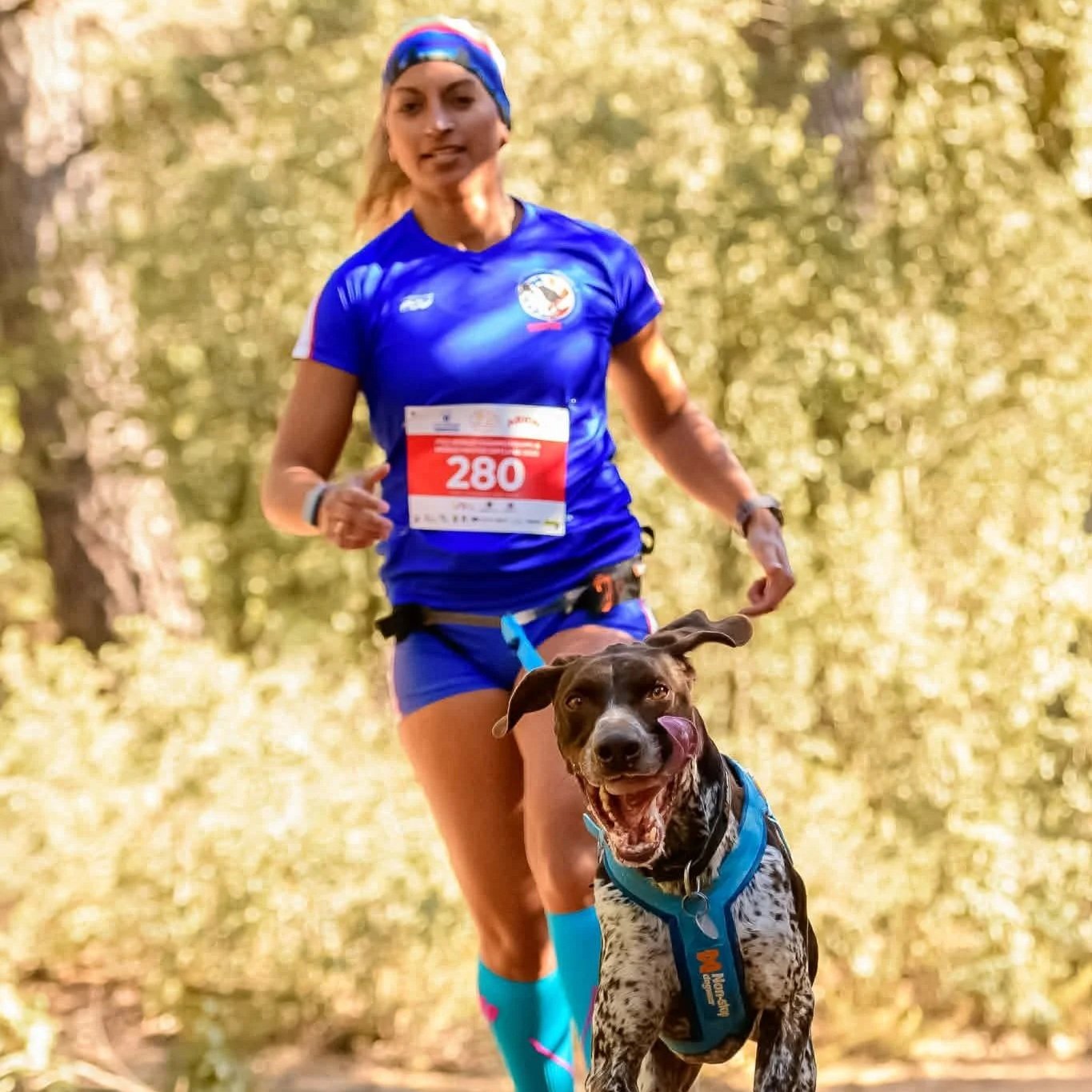
Joy racing with Pharoah
Dryland season is officially here, and a question we often get asked is how to fuel ourselves for multiple events on race day and how to refuel for day 2. We fuel our dogs like athletes, but it can be easy to overlook our own nutrition especially on a busy race weekend. Here are a few tips:
Eat breakfast. Even if you’re the first racer out of the chute, eating something before you race can make a difference in your energy levels throughout the day. Not the first racer? Give your body a couple of hours to digest what you’ve eaten and remember to stick with familiar foods on race day. Oatmeal, toast & peanut butter, a banana, and some eggs can be an easy meal.
Eat something within 15-20 minutes of finishing an event. Some classes have very tight turnaround times, so it’s important to plan ahead. Don’t wait until you feel drained. Keep foods light and easy to digest. Save the visit to the food truck until you’re done competing for the day.
Packing food ahead of time and having pre-portioned snacks can be a game changer. Bananas, jerky, trail mix, string cheese, pretzels, and watermelon are just a few ideas.
Don’t skip carbohydrates. Carbs are your body’s fast fuel. Your body only stores about 90 minutes of quick-access energy. Each event you do burns through your stored energy. Think of carbs like your phone battery. You start the day fully charged, but each event drains the battery a little bit. If you don’t plug back in even for a few minutes, you’re already starting the next event low. By your last event, you might be down to 20% of a full charge. That is not the energy level where you want to be to do your best. Don’t forget that carbs also fuel your brain. When your energy dips, your thinking may get foggy too.
Don’t skip protein. Protein isn’t about fueling the race you are doing right this second. It’s about repairing the muscle you just used so that it’s ready for your next event. Hard efforts cause tiny amounts of muscle breakdown, and protein is what helps rebuild the muscle. If you skip protein, you’ll notice that fatigue and soreness stack up fast.
Hydrate well. You don’t have to be sweating like crazy to become dehydrated. Sip water throughout the day rather than chugging before you start an event. Remember, if you’re thirsty, you’re already behind. Electrolytes or chocolate milk can help if you feel you need something extra.
Two-day races can make all this nutrition planning even trickier. What you eat (and drink) in the evening sets up how you’ll feel at the start line the next day. Number one priority: have a real dinner after the first day. You want to make sure you have carbs to refill the tank and protein to help rebuild muscle overnight. Don’t skimp because you’re tired. Plan ahead if you need to, and make sure you have options that will be easy on your stomach. It can be easy to make less-than-stellar choices when tired. Don’t forget to continue hydrating, too.
Race weekends are social, and that’s part of the fun. If you’re working to maximize performance and recovery, your nightly beer(s) could be working against you. The body prioritizes processing alcohol over refilling glycogen and repairing muscle. Drinking alcohol will interfere with the recovery work you’re trying to accomplish. Alcohol can also wreck your sleep quality (it disrupts REM sleep later in the night), and it actively pulls fluid out of you while you’re trying to rehydrate from day one.
You wouldn’t send your dog into an event under-fueled and dehydrated, so don’t do it to yourself either. A little planning goes a long way toward feeling strong for each event—not just the first one. Take care of yourself and you’ll be a stronger team.
Regards, Joy
Volunteer Spotlight on: Jim Cunningham, IFFS Judge and Race Marshall
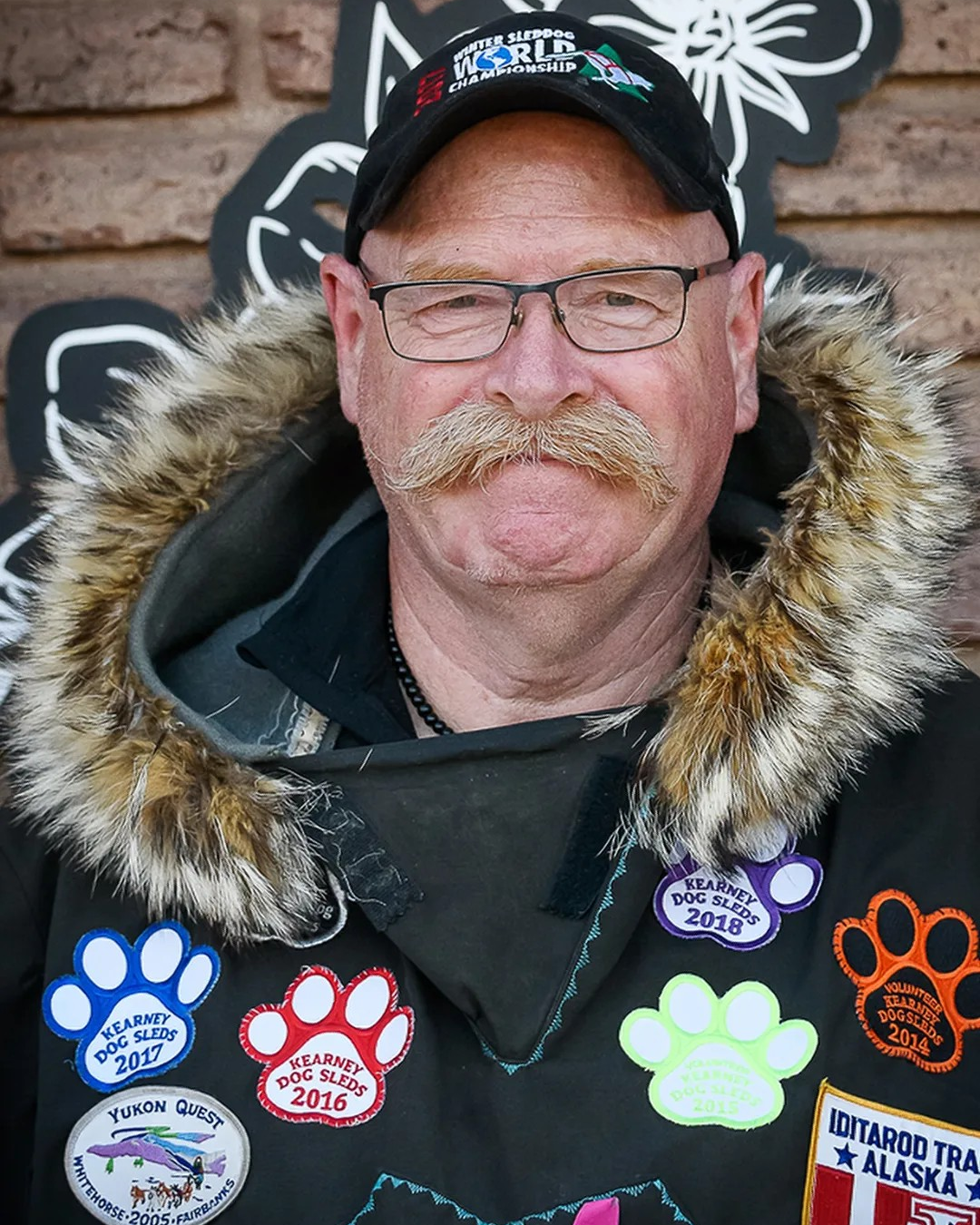
For this issue’s spotlight, we are going to let Jim share his experience firsthand with our readers.
I started my sled dog career in 1989 running Registered Northern Breed dogs in sprint-distance races. Over the next 16 years I participated in 41 races, including finishing up by representing Canada at the 2005 International Federation of Sleddog Sport (IFSS) World Championships in Dawson City, Yukon.
In 2004 I received my Siberian Husky Club of Canada Race Marshal License. In 2014 I became one of eight people in the world to hold an IFSS Sports Race Marshal’s license.
Since 2004, I have been a race official in over 140 races around the world. I have held the position of race marshal in over 130 of those races including long distance, mid-distance, sprints, ski dog, and dryland events. I have also been a race organizer, checkpoint organizer, timer, handler, chief judge, and animal control officer.
In a normal year I will officiate between 6-10 races throughout the world. Between October and April of each year, you will find me in the Northern Hemisphere. Between June and November, I travel to the Southern Hemisphere.
I am a retired environmental technician. I live in Ontario with a very understanding and supportive wife (Karen), and I have two children (Julie and Greg) and two grandchildren (Lily and Owen).
My philosophy during a sled dog event is:
Every competitor is a bib number. You’re not a world champion or a novice; in my race everyone is equal.
Every dog matters.
If anyone physically, mentally, or verbally abuses any dogs, volunteers, veterinarians or race organizers during the event, they will have to deal with me, and it won’t be a pleasant encounter. If we don’t treat the dogs and humans right, we don’t have a race. I want to see every one of them come back next year.
You can’t please everyone, but I will always do my best to keep as many people happy as possible.
Ask a Vet: Dr. Ayla Mollen
As summer starts to give way to fall and cooler temperatures, we usually begin ramping up our training regime. One of the important things to watch out for in our canine friends during this seasonal transition is dehydration. We’ve asked Dr. Ayla Mollen to give us some insight into identifying and preventing dehydration in our dogs. Dr. Mollen currently works as a veterinarian in Northern Wisconsin and as a Detection K9 Handler.
Q: What are the symptoms of canine dehydration?
A: Recognizing dehydration in dogs can be difficult, especially if you do not know what you are looking for. In early dehydration, dogs will have what we call a prolonged skin-tent, where if you pinch and pull their skin up, it takes longer for it to return to its normal shape. They may also have drier gums. As dehydration worsens, you can see lethargy and systemic changes including changes to their heart rate and blood pressure. Severe dehydration is more often seen with rapid water loss like diarrhea, vomiting, or increased urination rather than being exercise-induced, unless the dog has not had access to water for a prolonged period of time.
Q: How should you treat a dog with dehydration?
A: For a dog with mild dehydration, offering water and encouraging the dog to drink is often enough to help rehydrate them. If a dog does not want to drink or is severely dehydrated, the dog may need subcutaneous fluids or intravenous fluids.
Q: Are there instances where you should seek medical attention for dehydration?
A: If a dog is having symptoms of dehydration or a period of rapid water loss (either GI or urinary related), it is important to ask a veterinarian to evaluate the dog.
Q: What tips can you offer for preventing dehydration?
A: Offer water frequently to prevent dehydration, especially during periods of exercise. Some dogs do not want to drink when they are working. If your dog does want to drink, try offering unsalted bone broth, adding water to food or treats, offering some wet food, or adding ice cubes to water to help increase their water intake.
Athlete Spotlight: Samantha Wawiernia
Samantha Wawiernia’s journey into sled dog sports started as a young girl, fascinated by everything she saw at a sled dog expo. Years later, that fascination would lead her all the way to a World Championship podium. When Sam decided to dip her toe into the sport, she put harnesses on her hunting dogs, added a retired Alaskan Husky as a leader, and started letting the dogs pull her boys around on a sled. What began as a fun way to keep her hunting dogs in shape eventually led her to a local dryland race, where she entered her first 2-dog bikejor event. And things escalated pretty quickly from there.
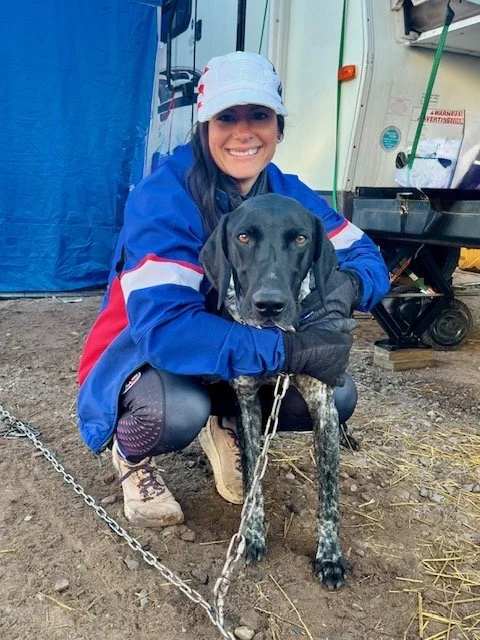
As Sam became more competitive, members of the mushing community helped her find dogs, learn the sport, and build a team capable of competing at the highest level. Which is exactly what they did at the 2025 IFSS Dryland World Championships in Minocqua, Wisconsin, where Sam represented Team USA in 6-Dog Rig. Sam shared that preparing for Worlds took a lot of effort and required a lot of time spent training in the dark before long shifts at work. Her dedication paid off. After two incredible runs, Sam and her team took home the gold medal in 6-Dog Rig. But Sam’s favorite measure of success wasn’t the clock or the podium. “I just wanted my dogs to perform at their best… There’s nothing my dogs could have given me more of.”
Sam also had the unique experience of competing as an athlete at Worlds and then immediately switching hats to cheer on her son, Sawyer, as a mom. Sawyer worked hard alongside his mom to achieve his own goal of earning a spot on Team USA and reaching the podium in the Junior 4-Dog Rig class.
Today, Sam continues to train her own team but also pours energy into growing the sport that welcomed her. Alongside her H&H Racing teammates, she organizes races in her Michigan community and introduces more people to sled dog sports. Her advice to someone wondering whether their own dog might be able to do this? Believe you can, find what works for you and your dog, and get out there and practice.
Home: Minnesota Sport: 6-Dog Rig Profession: Registered Nurse
When she’s not training: She enjoys hunting and snowmobiling with her family.
Watch the full Athlete Spotlight on the USFSS Team USA YouTube channel to hear Samantha share more about her team of canine athletes, her local mushing community, and what it’s like to be a reigning World Champion.
Club Spotlight on: Wisconsin Trailblazers Sled Dog Club (WITB)
One of the longest-running clubs in the Midwest, the Wisconsin Trailblazers Sled Dog Club has been active with a thriving membership for 60 years. Not only does the club have incredible participation from Wisconsinites, it also boasts a strong presence from mushers across the country with an average of more than 130 memberships each year. While winter events have generally brought most of the interest over the years, including the long-standing Three Bears sled race, dryland racing has generated great enthusiasm at the Minocqua Winter Park during the fall. This year Minocqua’s Almost Winter Dryland Dash is planned for October 31-November 1, 2026, in Minocqua, WI where the Trailblazers, as the local organizers, helped host the esteemed 2025 IFSS Dryland World Championships & Masters. The course is stunning and sprawls across beautiful cross country ski trails that test your endurance and skills at the park.
Beyond the race scene, the Trailblazers host an annual canine vaccination clinic with a local vet, potluck dinners, training gatherings, and volunteer/fundraising opportunities across the state. For any information regarding membership, events or getting involved with the club’s many volunteer opportunities, you can find the club on Facebook or visit, www.witrailblazers.org
Recipe for (Human) Road Warriors
Here’s another idea from USFSS Board Member Destinee Kiel for a convenient and healthy snack to fuel the human side on the team. These small bites are a great snack packed full of natural protein and filled with delicious goodness. They are perfect for weekend travel: once they are made, you can pop them into the refrigerator or freezer to let them firm up, and then you can enjoy them the whole weekend. FYI, these little guys make a great midnight snack, ask me how I know! They are a sweet and powerful treat for any time of the day: who doesn't like to start their day with a little chocolate?
Ingredients
1-1/4 cup oat flour
¼ cup protein powder (you can do chocolate or vanilla)
¼ teaspoon salt
½ cup peanut butter or nut butter of choice
1 teaspoon vanilla extract
2 teaspoons coconut oil
⅓ cup honey (or sweetener of choice (agave syrup, etc.)
Optional, but recommended: chocolate chips (mini size works best) or other mix-ins
Directions: You may need to adjust proportions a little to help hold them together. Place in refrigerator or freezer until firm.
